
Telecom gear makers, who are in talks with telcos, say that if all goes well, they are ready to roll out the first phase of 5G services from October this year and cover the country's top 30-50 cities (in limited areas) by March 2023. The gear makers expect the telecom companies to give them a heads-up about their plans as well as the equipment required by July, and have promised deployment in three to four months after that. India's main telecom gear suppliers are Nokia, Ericsson and Samsung.

The incumbent operators faced the onslaught of free offers and cheaper rates from Jio.

Total subscriber base at the end of November 2011 stood at 663.78 million users.

India's second-largest telecom operator Bharti Airtel on Tuesday posted more than twofold year-on-year jump in its consolidated net profit for the March quarter to Rs 2,008 crore, buoyed by a lift in average revenue per user and an exceptional gain. The telco said its Q4 scorecard was backed by strong performance delivery across the portfolio and its CEO Gopal Vittal, in a statement, exuded optimism about opportunities in the coming years and Airtel being "well-poised" as a company. Airtel, which competes in the market with Reliance Jio and Vodafone Idea, as well as state-owned BSNL/MTNL, promised to maintain razor sharp focus on financial flexibility, optimising the capital structure and finance cost.
These circles account for 23 per cent of Bharti's revenues and armed with additional spectrum, it will eat into rivals' share

Jio says it has completed mobile number portability testing and is certified MNP-compliant

The top three operators - Airtel, Vodafone and Idea - which account for over 67 per cent of the GSM market, lost over 2.17 million users in September.

Reliance Jio has accused old operators, including Bharti Airtel and Vodafone Idea, of "illegally" masquerading wire-line numbers as mobile numbers for "undue enrichment".

Companies have activated a comprehensive pandemic response plan with requisite risk mitigation protocols for keeping networks working as telecom is an essential service.

Analysts have pointed out that with the dues arising out of the SC judgment there could soon be only two private telcos in the country, and not three - Reliance Jio, Bharti Airtel and Vodafone Idea - as now.
Airtel, Vodafone-Idea and other telecom operators may have to pay the government a whopping Rs 1.42 lakh crore following the Supreme Court order last week that sent shock waves through an industry already grappling with billions of dollars in debt and an intense tariff war to retain customers.

Idea tops list of companies with high percentage of active subscribers.

Attempts are being made to balance the need for health of the sector, consumer interest while complying with the Supreme Court order on statutory dues.

At the 45th Annual General Meeting of Reliance Industries (RIL) in August, chairman and managing director (CMD) Mukesh Ambani described the company as an "unputdownable book" with never-ending chapters of success. "Reliance grew from strength to strength because we internalised the founder's mindset of purpose, philosophy and passion," he said. Wednesday marked the 90th birth anniversary of RIL founder Dhirubhai Ambani.

The Supreme Court on Friday dismissed the applications filed by telecom majors, including Vodafone Idea and Bharti Airtel, seeking rectification of the alleged errors in calculation of Adjusted Gross Revenue (AGR) related dues payable by them. "All the miscellaneous applications are dismissed," a bench headed by Justice L Nageswara Rao said while pronouncing the order. The telecom companies had submitted before the apex court that arithmetical errors in the calculation be rectified and there are cases of duplication of entries.

The government has given an option to telcos to pay back interest on dues through equity and also conveyed that it has no interest in acquiring any telecom company, a top official of debt-ridden Vodafone Idea has said. Vodafone Idea Ltd (VIL) managing director and CEO Ravinder Takkar in an interview to PTI said it is clear that the government wants the company to compete in the market and there should be at least three private service providers in the telecom sector. "I have had many many interactions across various parts of the government leading up to this announcement (telecom reforms).
Total wireless subscribers increased from 1.1 billion, in January to 1.2 billion in February, thereby registering a monthly growth rate of 0.72 per cent.

Top companies have grabbed a bigger pie of their sectors in the pandemic period, leading to a further rise in market concentration in many industries as measured by the Herfindahl-Hirschman Index (HHI). The HHI score, which indicates competitive intensity in an industry (or a lack of it), reached a new high in FY21 as bigger firms raised their revenue market shares either organically or through mergers and acquisitions. A higher HHI score indicates a rise in market concentration in favour of a few firms while a lower score means that the industry's revenue is more evenly divided among many companies

Jio's adjusted gross revenue share went up by 7 percentage points in Q2FY18-19 over the previous quarter in the circles of the C category.

Based on industry estimates, telecom companies, including Bharti Airtel, Reliance Jio, Vodafone Idea and BSNL, are expected to invest over $10 billion on buying 5G telecom equipment in the next five years as they transition from non-standalone networks to standalone 5G networks.

Taking the pole position among other operators, Reliance Jio logged download speed of 19.12 mbps during April, even bettering its own performance of 18.48 mbps demonstrated in the previous month

Prime Minister Narendra Modi will launch the much-awaited 5G services in India on October 1, 2022, an official release said on Friday. According to the release, 5G to be launched by the Prime Minister in select cities, will progressively cover the entire country over the next couple of years. The cumulative economic impact of 5G on India is estimated to reach $450 billion by 2035. Capable of supporting ultra-high-speed internet services, the fifth generation or 5G is expected to unleash new economic opportunities and societal benefits, serving as a transformational force for Indian society.

Experts say going ahead data price will fall further due to competition

Telecom complaints against other players were below 500 in the first half of 2016.

Billionaire Gautam Adani's group is said to be planning a surprise entry into the race to acquire telecom spectrum, which will pitch it directly against Mukesh Ambani's Reliance Jio and telecom czar Sunil Bharti Mittal's Airtel, sources said. Applications for participating in the July 26 auction of airwaves, including those capable of providing fifth-generation or 5G telecom services such as ultra-high-speed internet connectivity, closed on Friday with at least four applications. Jio, Airtel and Vodafone Idea -- the three private players in the telecom sector -- applied, three sources with knowledge of the matter said.
It reported adding 698,3146 subscribers in September, the lowest since it added 6.1 million in November 2017.

Bidding for the sixth round of spectrum auction for radiowaves worth Rs 3.92 lakh crore will start from March 1, according to a notice issued by the Department of Telecom on Wednesday. The long-awaited spectrum auction is being held after a gap of four years and over two years after the Telecom Regulatory Authority of India (Trai) calculated and recommended base price for the radiowaves. The DoT has fixed January 12 for the pre-bid conference and January 28 as the last date for seeking clarification to the notice.
Jio to charge users 6 paisa/min for voice calls made to rival phone networks. However, these charges are not applicable on calls made by Jio users to other Jio phones and to landline phones and calls made using WhatsApp, FaceTime and other such platforms.

The companies that have seen sharp erosion of market wealth include YES Bank, Indiabulls Housing Finance, Zee Entertainment, Vodafone Idea, and Bharat Heavy Electricals.

BSNL, Tata Teleservices and Reliance Communications, who also provide GSM technology-based services, are not part of the report.

The job market saw an uptrend in the March quarter (Q1), with job interviews increasing 13.71 per cent quarter-on-quarter (QoQ) to over 30 million, according to Apna.co, India's largest jobs and professional networking platform. It recorded a 42 per cent QoQ growth in its employer base. As a result of the second wave of Covid-19 last year, sectors such as healthcare, delivery, and e-commerce were booming while others had fairly low employment.

With India rolling out 5G services, can telcos get the sizeable 350-400 million 2G customers to upgrade to 4G, or even better -- but very improbably -- straight to 5G?

Tata Teleservices and Reliance Communications have said that they had been denied extra spectrum even as the old GSM operators like Bharti, Vodafone and Idea were been allocated excess spectrum in many circles.

Engage, don't entice, advises advertising guru Sandeep Goyal.
Reliance Jio's decision to acquire 700 MHz in combination with the possible use of an advanced standalone (SA) 5G network could give it an edge over its rivals, according to most analysts. The dissenters argue that the stiff price tag touching Rs 40,000 crore to grab 10 MHz of spectrum in 700 to provide coverage for its SA 5G network which offers ultra-low latency (unlike non-standalone or NSA), has a long way to go in India in terms of finding use cases that can be monetised. Globally, 700 MHz is a pivotal band which provides huge coverage, indoor penetration (especially useful in India where walls are thick) and is already considered by the European Union to be the 'pioneer band' for 5G, with 3.5 GHz and 26 GHz, both of which were auctioned in India recently.
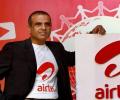
The telecom industry, he said, is vital to the nation and the digital agenda of the government.
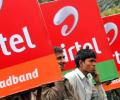
Airtel had previously responded to the DoT's order by offering to pay Rs 10,000 crore by February 20 and the remaining before March 17. Airtel owes nearly Rs 35,586 crore, including licence fee and spectrum usage charge, to the government.

The freebies are now over, but Jio will need to notch up subscriber numbers and margins to prove its sceptics wrong.

Will open radio access network technology (O-RAN) disrupt the way 5G networks roll out in the country? After all, it promises to offer a substantially lower capital cost, enables the choice of an array of vendors, and provides more network flexibility - all very important for telcos who expect to invest over Rs 60,000 crore to roll out a pan-India 5G network and that's without spectrum costs. But more importantly, it counters the stranglehold of global telecom gear makers such as Ericsson, Nokia, and Samsung over telcos to whom they sell propriety technology and bundled hardware and software.
The Centre had earlier urged the top court that up to 20 years be given to telecom companies for the payment of dues in staggered manner.
 © 2026 Rediff.com - Advertise with us - Disclaimer - Privacy Policy - Sitemap - Feedback - About us - Terms of use - Grievances